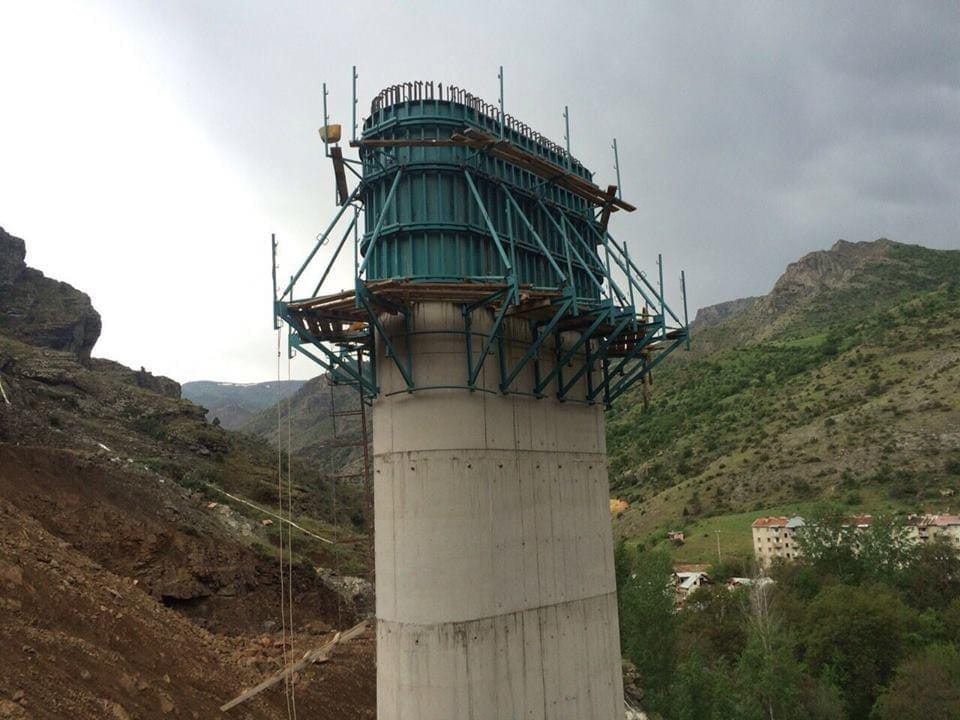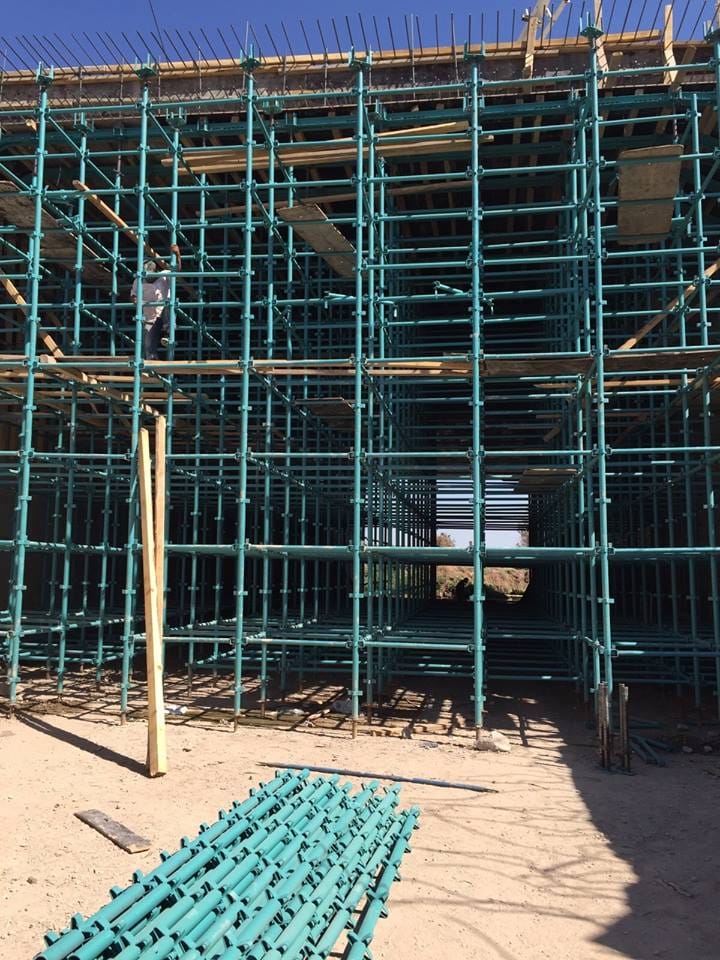
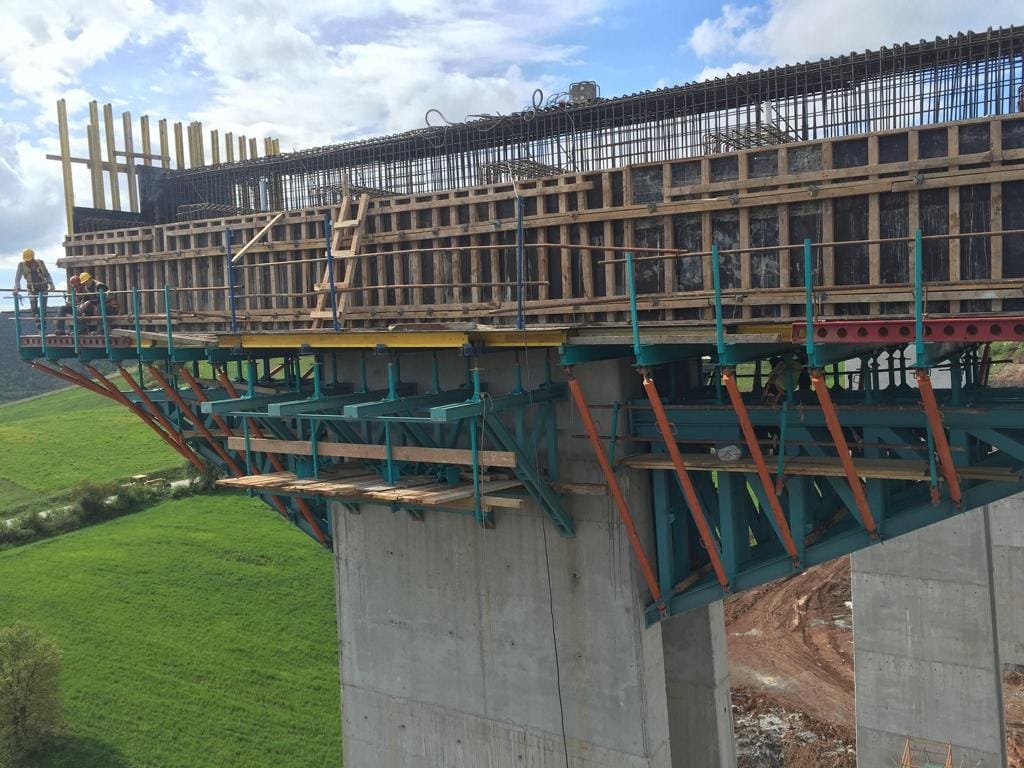
Bridge and viaduct formwork differs from building formwork in two fundamental ways: working height, and the frequent absence of solid ground to transfer load to. Those two differences change the design approach from the outset.
1. Load calculation: not just concrete
The loads to be considered in formwork design go well beyond the weight of fresh concrete. They include:
- Vertical weight and lateral pressure of fresh concrete
- Weight of reinforcement
- Personnel and equipment load
- Dynamic effects during pouring (pump surge, vibrators)
- Wind load — often decisive for tall systems in exposed terrain
- Self-weight of the formwork and temporary loads during assembly
Lateral concrete pressure is directly related to pour rate. Fast pouring raises peak pressure on the formwork. The pour rate to be used on site must therefore be established up front and adhered to.
2. Hanging and cantilever systems
In deck formwork the load is usually transferred not to the ground but to previously cast structural elements. Anchorage design then becomes critical.
- The concrete the anchor bears on must have reached adequate strength at the time of loading
- Anchor capacity must be checked for shear and combined effects, not tension alone
- Anchor positions must be planned in advance to avoid clashing with reinforcement
- The dismantling sequence must not allow load to be released suddenly
3. Working platforms and safety
In bridge formwork the platform is not an accessory but an integral part. Platforms added later are neither included in the load calculation nor generally adequate.
- Platform width must allow the worker to move comfortably with equipment
- Double guardrails and toe boards are standard
- Harness anchor points must be defined on the formwork body
- Access must be by caged ladder or a secure platform connection
- Intermediate protection against falling material must not be omitted
4. Assembly and dismantling sequence
In complex formwork systems the assembly sequence matters as much as the design. A system erected in the wrong order can end up carrying loads never anticipated at design stage. Written assembly and dismantling instructions must therefore accompany every formwork set.
5. Trial assembly
For variable-depth decks, curved pier geometries or box girder systems, workshop trial assembly before shipment is strong insurance. The cost of a mismatch discovered on site is many times that of one discovered in the workshop.
Conclusion
Bridge formwork is by nature an engineered product. It should not be selected from a catalogue but designed around the project geometry and site conditions. If you would like to review the formwork solution for your project, our engineering team is available.